
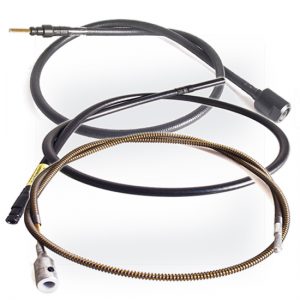
Foredom Flex Shaft Types and Handpieces: Identify Yours
Which Foredom Flex Shaft and Handpiece Do I Have? 1. Which Shaft Do I Have? The easiest way to tell

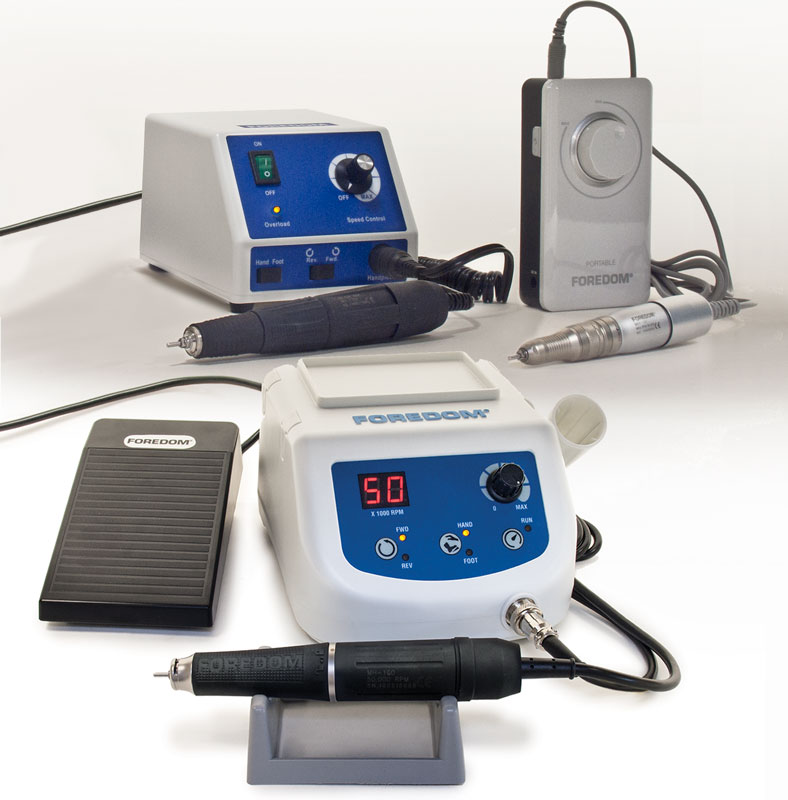
The motor hangs above your bench (or sits on it) and turns a flexible shaft. The shaft drives the handpiece in your hand. Speed is set with a foot pedal or dial.

The motor is inside the handpiece. A light cord connects it to a small control box on your bench. No hanging motor, no shaft.
| Flex shaft | Micromotor | |
|---|---|---|
| Top speed | Up to 18,000 RPM (Series SR) | 30,000 to 50,000 RPM, depending on kit |
| Torque | More. Best for heavy grinding, carving and stock removal. | Less, but the higher speed removes material at a comparable rate with a lighter touch. |
| Handpieces | The widest range: quick change, chucks, angle heads, hammer, and handpieces that take 1/4" shanks. | Rotary handpieces with 2.35mm (3/32"), 1/8" or 3mm collets, plus a hammer handpiece. |
| In your hand | The shaft has some pull and stiffness. | Just a light cord, so it is easier to reach awkward angles. |
| Space | Needs a spot to hang the motor or set it on the bench. | A small control box. Battery-powered portable kits need no outlet. |
| Upkeep | Lubricate the shaft now and then. Maintenance guide | Brush-type motors need new brushes eventually. Brushless motors have none to replace. |
| If you mostly do this | Start with |
|---|---|
| Heavy grinding, wood carving, metal shaping, engine porting | Flex shaft |
| Fine detail, bright cutting, cleanup on castings, small precision parts | Micromotor |
| Stone setting and engraving | Either. Micromotor hammer kit, or a flex shaft with a hammer handpiece. |
| Working at shows, classes, or away from your bench | Portable micromotor |
| A bit of everything | Flex shaft first. Add a micromotor later for detail work. |
| Kit | Best for | |
|---|---|---|
 |
K.1070 High Speed Rotary Up to 38,000 RPM, foot control included |
Our most popular micromotor. Deburring castings, bright cutting, fine detail in wood. |
 |
K.1040 Brushless Up to 50,000 RPM, low range 500 to 5,000 RPM |
Top speed and smooth torque, with no motor brushes to replace. |
 |
K.2030 Portable Brushless Up to 35,000 RPM, rechargeable battery |
Shows, classes and small spaces. No outlet needed. |
 |
K.1030 Portable, Brush Type Up to 30,000 RPM, rechargeable battery, 6 to 7 hours per charge |
Brush-type portable. Pocket-size control, or plug it in for all-day use. |
 |
K.1080 Hammer Adjustable hammer action, graver holder included |
Stone setting and engraving without an air compressor. |
 |
K.1090 Hammer plus Rotary Two handpieces, one control |
Setters and engravers who also need a rotary tool. |
See All Micromotor Kits Micromotor Parts and Accessories Compare Specs and Handpieces
| Kit | Speed | Collet sizes | Compatible handpieces |
|---|---|---|---|
| K.1040 | 500 to 50,000 RPM | 3/32", 1/8" | H.MH-140, H.MH-14018 |
| K.1050 dual port | 1,000 to 50,000 RPM | 3/32", 1/8" or 3mm | H.MH-150, H.MH-15018, plus H.MH-120, H.MH-170, H.MH-17018, H.MH-110 |
| K.1070 | 1,000 to 38,000 RPM | 3/32", 1/8" or 3mm | H.MH-120, H.MH-170, H.MH-17018, H.MH-110 |
| K.1080 hammer | 65 to 2,500 strokes/min | Threaded anvil point | H.MH-120, H.MH-170, H.MH-17018, H.MH-110 |
| K.1090 hammer plus rotary | 1,000 to 38,000 RPM | 3/32", 1/8" or 3mm | H.MH-120, H.MH-170, H.MH-17018, H.MH-110 |
| K.2030 portable | 1,000 to 35,000 RPM | 3/32", 1/8" or 3mm | H.MH-230, H.MH-23018 |
| K.1030 portable | Up to 30,000 RPM | 3/32" or 1/8" | See product page |
Torque, handpiece weight and control unit numbers are in the micromotor comparison chart (PDF).
Need a smaller shank without changing the collet? Collet adapters fit inside the collet of all our micromotor handpieces except the hammer and chuck styles.
Most people should start with a Series SR. Our flex shaft buying guide compares the SR, TX, LX and PowerGraver and shows what a complete setup needs.
Which Flex Shaft Should I Buy? Shop SR Setups
Already have one? Identify your shaft and handpiece.
Neither is better overall. A flex shaft has more torque and more handpiece choices. A micromotor is faster, lighter in the hand and takes less space. Pick by the work you do most.
Yes, if the shank fits the collet. Foredom micromotor handpieces take 2.35mm (3/32"), 1/8" or 3mm collets. Burs with 1/4" shanks need a flex shaft handpiece.
The K.1070, K.1080 and K.1090 share the same control unit (HP4-917), so the H.MH-120, H.MH-170, H.MH-17018 and H.MH-110 handpieces work with all three. The K.1050 dual port runs them on its second port. The K.1040 uses the H.MH-140 and the K.2030 uses the H.MH-230.
Yes. Many people rough out with a flex shaft and finish detail with a micromotor.
Yes, both are. Choose by the work you plan to do most, not by which seems simpler.
Flex shafts need the shaft lubricated now and then. Brush-type micromotors eventually need new motor brushes. Brushless micromotors have no brushes to replace. Check your manual for details.
Still deciding? Answer a few questions in Find Your Foredom, use the Bur and Accessory Finder, or find a Foredom dealer.
Which Foredom Flex Shaft and Handpiece Do I Have? 1. Which Shaft Do I Have? The easiest way to tell
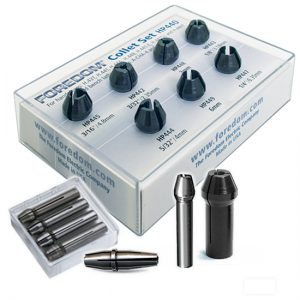
A collet is a sleeve that grips a rotating tool shank and holds it centered. See how collets work, what sizes Foredom handpieces take, and how to choose.
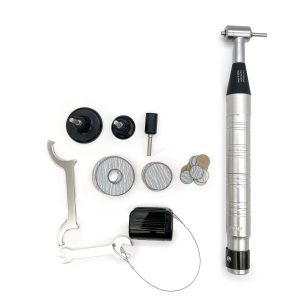
Why Foredom Stands Out in the Automotive and Porting Industry When it comes to tools, especially for precision-driven work like
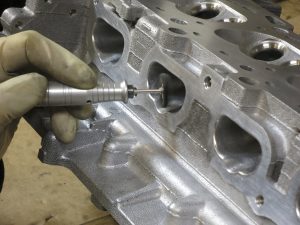
Engine porting demands precision, control, and the right tools to optimize airflow and performance. This guide highlights the essential tools
Proper maintenance of your Foredom flex shaft is key to ensuring its longevity, efficiency, and optimal performance. One critical aspect