Search

Drilling Holes In Stones: Tips and Tool Recommendations

Drilling Holes In Stones: Tips and Tool Recommendations

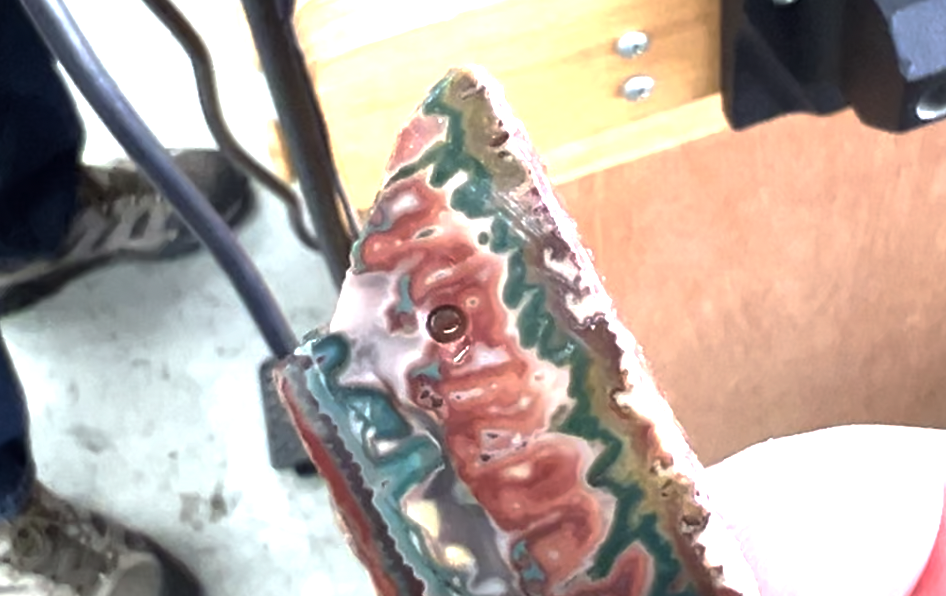
Drilling stones, whether for jewelry making, crafting, or professional stonework, requires precision, patience, and the right tools. One of the most important tools for this kind of work is a flexible shaft drill, which offers the versatility and control necessary for detailed stone drilling. When selecting a flexible shaft model for drilling stones, several factors come into play, including the drill’s power, speed, durability, and the types of stones you plan to work with.

Picking the right machine.

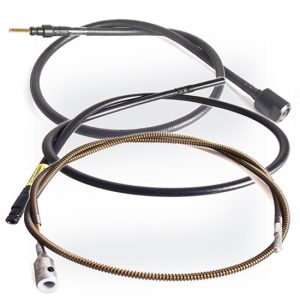
The Flex Shaft – Power, Speed, and Durability

Drilling stones is a demanding task that can quickly wear down lesser tools. A flex shaft rotary tool is the perfect tool to take on this task!

What to look for:

Look for a model known for its durability and longevity. High-quality flexible shaft drills are designed to withstand the rigors of stone drilling, reducing the likelihood of repairs or replacement, and ensuring a better return on investment.

Stones vary greatly in hardness, so the ability to adjust speed is crucial. Lower speeds are typically used for harder stones to prevent cracking or breaking, while higher speeds can be more effective for softer stones. A model that offers a wide RPM (revolutions per minute) range gives you the versatility needed for different materials. Models like the Foredom SR that have separate variable speed foot pedal controls can provide the user with hands-free speed control.

Picking the right Handpiece

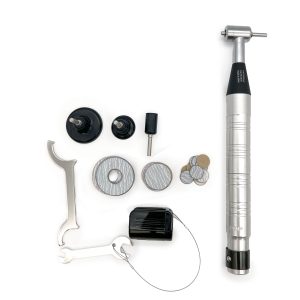
The handpiece is part of the flex shaft tool that you hold and manipulate to drill into the stone. The flexible shaft model you choose must be compatible with handpieces designed for stone drilling. These handpieces should be comfortable to hold for extended periods, offer precise control, and be capable of holding a variety of drill bit sizes.

The Foredom flexible shaft motors have a wide selection of compatible handpieces.

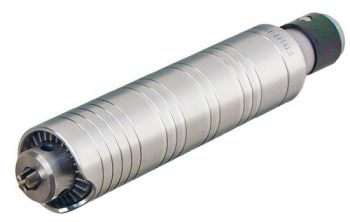
The H.30 or 3-jaw chuck type handpiece can accept bit shanks from 0” to 5/32” (4mm).

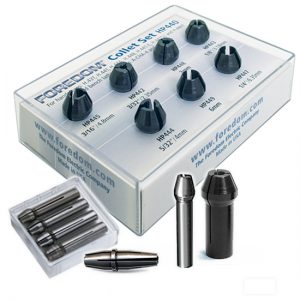
The H.44T handpiece is a collet style that comes with a ¼” (6.4mm) collet installed and additional 1/8” (3.17mm) & 3/32” (2.35mm) collets for all the common bit shank sizes.

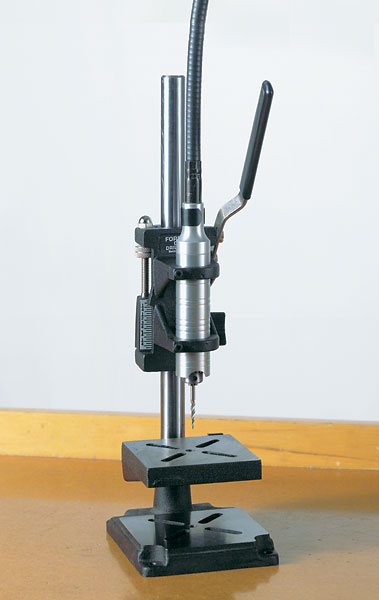
Both handpieces can be used with the P-DP30 Foredom drill press or the MAHH30 horizontal handpiece holder for hands-free use.

If you are drilling small holes in stone pendants or cabochons It is strongly recommended to use a drill press. Using a drill press to drill stones offers numerous advantages, especially when precision, safety, and quality are priorities. Drilling stones, given their hardness and the potential for cracking or chipping, requires a controlled environment and precise tools. Here are several reasons why a drill press is highly recommended for such tasks:

Precision and Accuracy – using a drill press

A drill press allows for precise control over the drilling angle, ensuring that holes are drilled at the correct angle every time. This is particularly important for projects where the angle of the hole can affect the fit or function of the stone piece.

  • Consistent Depth: The depth stop feature on most drill presses ensures that each hole drilled is of uniform depth, which is crucial for many applications, such as setting stones in jewelry or creating components that fit together perfectly.
  • Ease of use with a drill press.  Moving the bit in and out of the hole helps to flush out the cuttings, cool the bit and stone to prevent premature bit wear and thermal shock or fracture of the stone. This can only be done easily with a drill press.
  • Adaptability for Different Projects: Whether you are creating jewelry, sculpting, or working on a custom stonework project, a drill press can be adjusted to meet the specific requirements of each task.

Types of Bits for Stone Drilling or Carving

  1. Diamond-Tipped Bits: These are the most commonly used bits for stone drilling and carving. Diamond, being the hardest material, can cut through almost any type of stone. Diamond-tipped bits come in various shapes and sizes, from small drill bits for detailed work to larger burrs for carving and shaping.
  2. Carbide-Tipped Bits: Carbide is another hard material that can be used for stone, but it’s more suited to softer types of stone. Carbide bits can be a cost-effective alternative to diamond bits for certain applications, though they may not last as long when used on very hard stones.
  3. Electroplated Diamond Bits: These bits have diamond grit electroplated onto them, making them effective for detailed carving and drilling. They are especially good for intricate work on semi-precious stones and other relatively soft stones.
  4. Sintered Diamond Bits: These are designed for longevity and heavy use. They have diamonds embedded throughout the metal, not just on the surface. As the bit wears down, new diamond grit is exposed, making them last much longer than electroplated bits. They are ideal for extensive carving and drilling tasks in various types of stone.

Using Bits Wet or Dry

  • Wet Drilling/Carving: Most professional stone workers prefer to use diamond-tipped bits with water for several reasons. Water acts as a coolant, reducing the heat generated by friction, which can prevent the bit and the stone from overheating. Overheating can damage both the drill bit by stripping the plating and diamonds from the bit, and causing thermal shock that can crack the stone. Additionally, using water helps to reduce dust, which can be harmful to inhale and can also extend the life of the drill bit. Equipment designed for wet drilling or carving will specify water use and may include a water feed or be used with a water drip system. The main problem with wet work is not to allow water to get into your handpiece. Foredom has a splash back prevention kit AK103 that has throw-discs for the bur shanks and a plastic bag for the handpiece. Should your handpiece get wet, dry it by applying compressed air and then liberal use of a hair dryer.
  • Dry Drilling/Carving: Dry drilling is possible with certain types of bits and stones, but it typically requires taking frequent breaks to allow the bit to cool down and to clear away dust and debris. Dry drilling is more common with carbide-tipped bits and softer stones. However, it’s important to wear appropriate safety gear to protect against stone dust.

Choosing the right flexible shaft model for drilling stones depends on the specific requirements of your projects, including the types of stones you work with and the level of detail needed. Whether you are a hobbyist or a professional, selecting a durable, versatile, and powerful model will ensure that you can work efficiently and produce high-quality results. Always consider the compatibility with various handpieces and the availability of adjustable speed settings to match the hardness of different stones.

You might also enjoy

What Is a Collet?

A collet is a sleeve that grips a rotating tool shank and holds it centered. See how collets work, what sizes Foredom handpieces take, and how to choose.
Read More
Looking to get Attached? H.30 Attachments, It’s not just a handpiece.

The Foredom H.30 handpiece is a versatile and widely-used component in Foredom’s flexible shaft tool systems. It’s known for its reliability and adaptability, making it suitable for a variety of applications in jewelry making, woodworking, metalworking, and more. However, the true power of the H.30 handpiece lies in its compatibility with a range of attachments and accessories that extend its functionality far beyond a simple handpiece. Here’s an in-depth look at the H.30 handpiece and the various attachments that can enhance its capabilities.

Read More