When using burs across various applications like woodworking, jewelry making, and others, the key factors to consider include the bur material, the diameter of the bur, and the specific material being worked on.
It is important to keep in mind the speed rating or MOS (Maximum Operating Speed) on the bur you are about to use to avoid injury and to optimize your work to get the most out of your bur.
Why do they have speed ratings anyway?
The number one reason is to avoid injury. Ignoring the recommended bur speed can often result in injuries and equipment damage due to overheating or breakage. Operating at the correct speed ensures safe, efficient performance and prolongs the lifespan of your tools.
The next reason is to make sure you are using the bur at its optimal speed for cutting efficiency with control and precision.
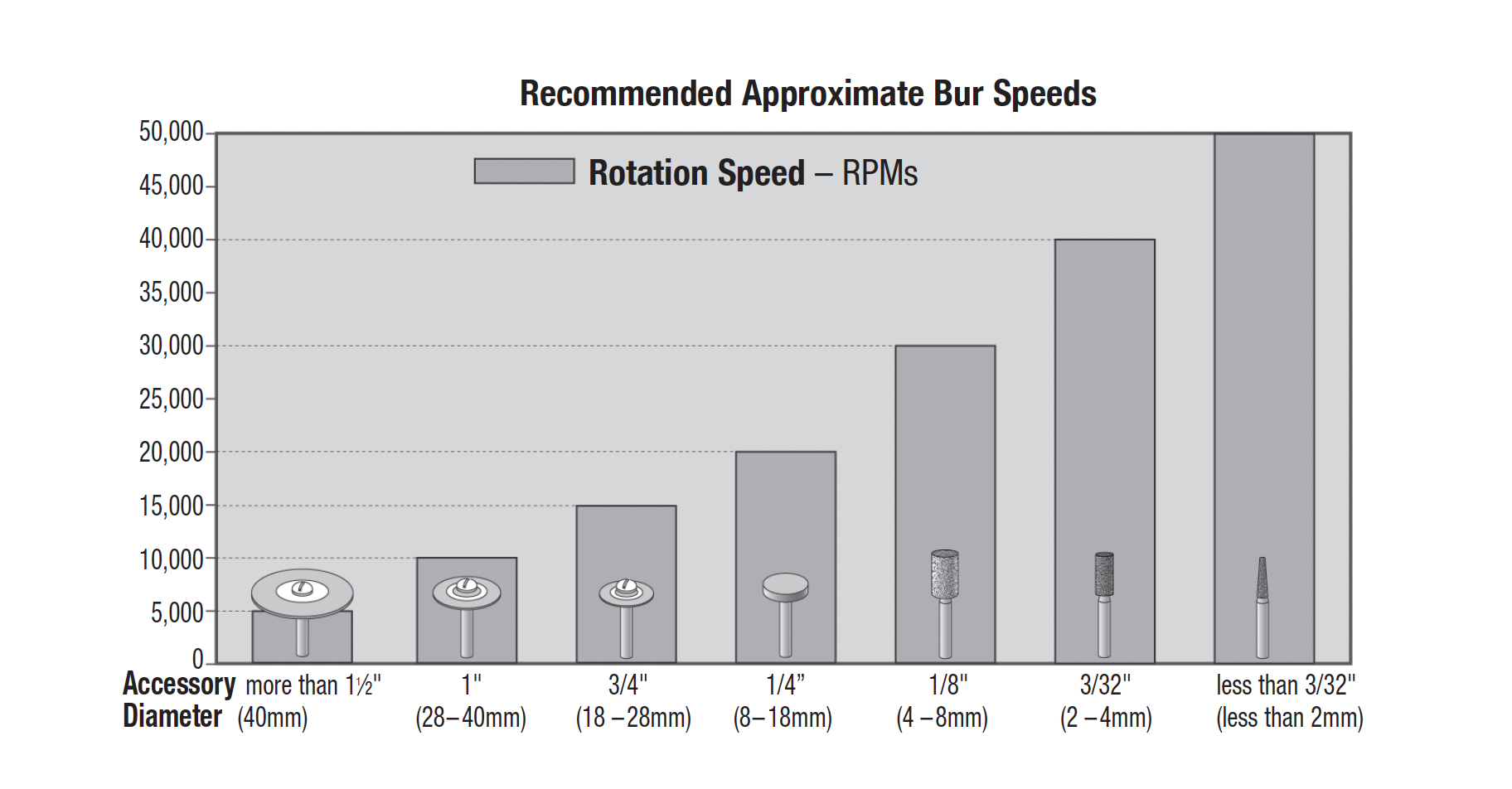
Larger bur heads and shanks typically require slower speeds compared to smaller heads and shanks. Larger burs, having more mass, can generate greater vibration and centrifugal forces at high speeds, which can lead to less precise cuts.
Smaller bur heads can operate at higher speeds because they produce less vibration and are easier to control, making them suitable for detailed work.
We have another article about why shank size matters that you read — HERE
TIP FROM MIKE
“Let the tool do the work! Don’t force it or put a lot of side pressure on it, if you’re not getting the result you want to switch to a coarser bur. Also don’t forget eye protection.” – Mike Z
The chart below provides an approximate recommended speed rating for burs. ***Please verify the specific rating of each bur from your supplier before beginning your project.****